Sorry to be getting so behind on my blogging! Got back late last night from a long holiday weekend at the Hluhluwe-Umfolozi Park and Mkhuze. Will update asap with more info incl some great Safari pics!
Much love,
Julie
Tuesday, April 14, 2009
Day 7 -- St Mary's; Surgery and OB

Day 7
Thursday
4/11/09
I thought of something that I should probably explain to my blog readers. You are all probably aware of the interplay between semantics and political correctness, aspecially in the US. For simplicity and consistency's sake, I am writing using the same race/ethnicity identifiers most commonly used in South Africa and in my conversations with people here. This primarily includes "black", "white", and "coloured". That doesn't mean I am necessarily comfortable with those terms or support their use.
Finished up our shortened week at St. Mary’s today. Yesterday was spent in theatre (surgery) where I witnessed my first cesarean! It was amazing to see the baby lifted directly out of the womb, gasp, and then start wailing. However, I was surprised to see the antiquated way the incision was made – vertically from navel to pubic bone – very unlike the small below-the-bikini line incisions we’re used to. After the final suture was placed, the patient was promptly rolled out and up to the cesarean recovery room, a large room lined with beds 10-12 inches apart.
Today I was in MOU (the Maternal Obstetrics Unit). While we didn’t see a vaginal delivery, I saw enough of the labor process to decide I may not want to give birth unless I can have a continuous flow of epidurals beginning a week before birthing. The MOU sees up to 20 patients a day and are doing the best possible with the resources available. Yet, coming from the US where birthing centers are made to be comfortable and sterility is prioritized, I was shocked by some of the patient care I saw today. The waiting room was full of ten women sitting on plastic chairs grimacing as they wait to fully dilate. One by one they’re taken into an exam room where the sister (nurse) checks blood pressure, heart rate, dilation, and cervical effacement. The sheet underneath the patient is not changed between patients unless it is soiled by a significant amount of bodily fluid. Gloves are used most of the time, but not always, for blood draws. There were no rails on the bedsides – a few of the patients I observed seemed a hair away from rolling right off the bed. The ward was so hot and sticky that women are fanning themselves as they wait through contractions without any pain medication given. Post-examination, the doctor or nurse hands the patient a sanitary napkin which they press to themselves as they waddle back to the waiting area. I was amazed at how tough these women are.
Politics came up again today, no surprise since the air is thick with the upcoming election. An older white doctor pulled me aside today to whisper “Don’t tell, but I regard your Barack Obama as my president too. We have a new president coming in as well but, in order to be a free world, freedom of the press is necessary. Enjoy your stay!” and then walk away. Later on, I spoke to one of the host family’s twelve year old sons about the election. According to Makabuongwa, aka Makabee, people should vote for Zuma because “he is a very good man, just like Barack Obama.”
After rotation we were able to enjoy some of the beautiful weather by going to the beach. Makabee and his friend Mini were excited to put on their “costumes” and come along, thankfully so as we were completely dependent on them for directions. Tonight is a mellow night as tomorrow morning we’re heading out to the Mkhuze Game Reserve and St Lucia estuary for the long holiday weekend. We’ve been warned about hippos “picking up the car and throwing it away,” so wish me luck!


Day 5 -- St Mary's distrct hospital
Day 5
Tuesday
4/9/09
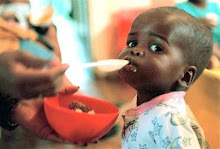
Today was the first official day of rotations. We grumpily arose before dawn for our 6:45am pickup which took us to St. Marys, one of Durban’s district (public) hospitals. A brief tour took us through the pediatric department and maternity ward. Both wards consist of large rooms with rows of beds – privacy is not an option. In the pediatric ward a doctor gently assisted a toddler-aged malnutrition patient in taking a few wobbly steps on tiny skin-and-bone legs while he cried empty, tearless, sobs. In the maternity ward we were told that no epidurals are given but the number of cesareans has jumped due to the HIV/AIDS epidemic. A sign on the wall requests “Parents are kindly asked to take care of their babies and do not give them to strangers,” in both Zulu and English. It is not uncommon for newborns to be abandoned.
Nicole and I were sent to Ithemba, the PEPFAR funded ARV clinic. In South Africa the government provides ARVs, but not until the patient’s CD4 count is below 200 – far below the US recommended guideline of 250-350 (with some peaople pushing for treatment inititation at 350-450). Patients come to Ithemba for all of their HIV/AIDS needs including check-ups and prescription allocation, which includes pill counting in order to check for compliance. The man behind the counter tells us it is a very slow day for the clinic. I can’t imagine what a busy day looks like as the line stretches around the corner and the waiting area has patients queued up five rows deep. A few of the patients actually look sick; most of them just look bored or are chatting and laughing.
My first stop is in “Vitals,” the first room all patients pass through. According to the nurse, they see approximately 100-150 patients per day with 60-70% being women. Patients are brought in once per week to start and then progress to once per month dependent on compliance. One of the check in questions is whether or not the patients is on or has completed treatment for TB as the vast majority of patients test positive. Most patients come in for testing once they have a nagging sickness, very few get tested regularly without symptoms.
1st line: d4T+3TC+RVP or NVP
2nd line: AZT + dd + LPVlr
Next stop is the pill count room, where patients bring their remaining pills to be counted. The actual count is compared to what it should be with 100% compliance and, if “not balanced,” the patient receives compliance counseling. As far as I could tell the counseling consists of the patient being scolded and warned not to do it again but, with lines of patients out the door, there’s little time for more. The clerk let me “pill count” a few patients while he watched over my shoulder which, for some reason, rendered me unable to do the most basic addition. I began to get the hang of it after a few patients which gave the clerk enough confidence to get up without warning and leave for five minutes. Not wanting to seem completely helpless, I just kept on counting.
After the requisite tea time, Nicole and I went in search of a doctor to shadow. Since it was a slower day we ended up spending the rest of the afternoon in a conversation with the one physician on duty, a beautiful younger Indian woman with a firecracker personality. We learned all about the upcoming elections, SA’s government corruption, her frustrations with tradition Zulu culture and patient compliance. Everyone here has a strong opinion about the charges against Zuma being dropped, and the doctor was no exception. According to her, the ANC will win no matter what as they are the majority and will have it no other way. She explained that the vast majority of Zuma’s support comes from people, especially the black population, wanting to support the “party that brought SA to freedom” and have no understanding of “stupid, stupid Zuma and the rest of his monkeys.” Zuma’s win will make SA the “next Zimbabwe” and the doctor is already working on obtaining her visa to “get the hell out of here.” Her outrage as a physician is understandable – polygamy is a major cause of HIV transmission in SA and Zuma is notorious for having four wives (he had five before one’s recent suicide). After a young HIV+ woman accused him of rape, Zuma claimed it was consensual and that he is safe from contracting HIV because he took a shower afterwards. The government is taking money away from healthcare and other urgent needs in order to erect the giant stadiums being built for the 2010 World Cup and other superficial post-apartheid fixes such as changing street names to more pre-colonial monikers such as Smith St to Dr. Methumbi Rd. It was fascinating to hear such candidness from someone with such firsthand knowledge of how SAs government corruption is fueling the spread of HIV/AIDS – and very depressing at the same time. The doctor has thrown her hands up and it’s easy to see why.
After another tea break, our conversation turned to girl talk – US and SA comparisons of cost of living, plastic surgery, where to go on holiday, interracial marriage, etc. The doctor had a million questions about our boyfriends and relationships, the cost of everything in the US, and US city vs suburb living. The cost of living is much less here -- one Rand is worth approximately 10 cents with our lunch today costing 12 Rand ($1.20). The doctor couldn’t believe we wouldn’t be constantly going on holiday to places like Egypt and Thailand, where we would be so rich. It’s strange that, even as a respected physician, she hasn’t been able to come to the US for holiday as she would have to “save up for two years for one week.” Oh… and she was very surprised to meet thin Americans since she thought we were all… insert puffer fish gesture here.
Looking forward to tomorrow – we’ll be in surgery observing cesareans, absess draining, and more.
Tuesday
4/9/09
Today was the first official day of rotations. We grumpily arose before dawn for our 6:45am pickup which took us to St. Marys, one of Durban’s district (public) hospitals. A brief tour took us through the pediatric department and maternity ward. Both wards consist of large rooms with rows of beds – privacy is not an option. In the pediatric ward a doctor gently assisted a toddler-aged malnutrition patient in taking a few wobbly steps on tiny skin-and-bone legs while he cried empty, tearless, sobs. In the maternity ward we were told that no epidurals are given but the number of cesareans has jumped due to the HIV/AIDS epidemic. A sign on the wall requests “Parents are kindly asked to take care of their babies and do not give them to strangers,” in both Zulu and English. It is not uncommon for newborns to be abandoned.
Nicole and I were sent to Ithemba, the PEPFAR funded ARV clinic. In South Africa the government provides ARVs, but not until the patient’s CD4 count is below 200 – far below the US recommended guideline of 250-350 (with some peaople pushing for treatment inititation at 350-450). Patients come to Ithemba for all of their HIV/AIDS needs including check-ups and prescription allocation, which includes pill counting in order to check for compliance. The man behind the counter tells us it is a very slow day for the clinic. I can’t imagine what a busy day looks like as the line stretches around the corner and the waiting area has patients queued up five rows deep. A few of the patients actually look sick; most of them just look bored or are chatting and laughing.
My first stop is in “Vitals,” the first room all patients pass through. According to the nurse, they see approximately 100-150 patients per day with 60-70% being women. Patients are brought in once per week to start and then progress to once per month dependent on compliance. One of the check in questions is whether or not the patients is on or has completed treatment for TB as the vast majority of patients test positive. Most patients come in for testing once they have a nagging sickness, very few get tested regularly without symptoms.
1st line: d4T+3TC+RVP or NVP
2nd line: AZT + dd + LPVlr
Next stop is the pill count room, where patients bring their remaining pills to be counted. The actual count is compared to what it should be with 100% compliance and, if “not balanced,” the patient receives compliance counseling. As far as I could tell the counseling consists of the patient being scolded and warned not to do it again but, with lines of patients out the door, there’s little time for more. The clerk let me “pill count” a few patients while he watched over my shoulder which, for some reason, rendered me unable to do the most basic addition. I began to get the hang of it after a few patients which gave the clerk enough confidence to get up without warning and leave for five minutes. Not wanting to seem completely helpless, I just kept on counting.
After the requisite tea time, Nicole and I went in search of a doctor to shadow. Since it was a slower day we ended up spending the rest of the afternoon in a conversation with the one physician on duty, a beautiful younger Indian woman with a firecracker personality. We learned all about the upcoming elections, SA’s government corruption, her frustrations with tradition Zulu culture and patient compliance. Everyone here has a strong opinion about the charges against Zuma being dropped, and the doctor was no exception. According to her, the ANC will win no matter what as they are the majority and will have it no other way. She explained that the vast majority of Zuma’s support comes from people, especially the black population, wanting to support the “party that brought SA to freedom” and have no understanding of “stupid, stupid Zuma and the rest of his monkeys.” Zuma’s win will make SA the “next Zimbabwe” and the doctor is already working on obtaining her visa to “get the hell out of here.” Her outrage as a physician is understandable – polygamy is a major cause of HIV transmission in SA and Zuma is notorious for having four wives (he had five before one’s recent suicide). After a young HIV+ woman accused him of rape, Zuma claimed it was consensual and that he is safe from contracting HIV because he took a shower afterwards. The government is taking money away from healthcare and other urgent needs in order to erect the giant stadiums being built for the 2010 World Cup and other superficial post-apartheid fixes such as changing street names to more pre-colonial monikers such as Smith St to Dr. Methumbi Rd. It was fascinating to hear such candidness from someone with such firsthand knowledge of how SAs government corruption is fueling the spread of HIV/AIDS – and very depressing at the same time. The doctor has thrown her hands up and it’s easy to see why.
After another tea break, our conversation turned to girl talk – US and SA comparisons of cost of living, plastic surgery, where to go on holiday, interracial marriage, etc. The doctor had a million questions about our boyfriends and relationships, the cost of everything in the US, and US city vs suburb living. The cost of living is much less here -- one Rand is worth approximately 10 cents with our lunch today costing 12 Rand ($1.20). The doctor couldn’t believe we wouldn’t be constantly going on holiday to places like Egypt and Thailand, where we would be so rich. It’s strange that, even as a respected physician, she hasn’t been able to come to the US for holiday as she would have to “save up for two years for one week.” Oh… and she was very surprised to meet thin Americans since she thought we were all… insert puffer fish gesture here.
Looking forward to tomorrow – we’ll be in surgery observing cesareans, absess draining, and more.
Tuesday, April 7, 2009
Day 4
Day 4
Monday
4/6/09
I’ve been thinking a lot today about what it means to fully immerse oneself in another culture, as I’m trying to do here in Durban.
The biggest culture shock when I arrived was the somewhat panicky feeling of having lost my freedom to, for the most part, go wherever I want whenever I want. Here, in our middle class neighborhood, the streets are considered not safe to walk at night due to threat of mugging. It is recommended to travel in groups at all times and with a man whenever possible. Of course my first thought was something along the lines of “Oh God, why didn’t I just go to Cape Town?” However, after some thought, I realized that this is reality for the people of Durban – and most of the global population. We tell people to get exercise or go to the doctor, without realizing they either have no way to get there or are afraid to leave their homes. I’m surprised how casually Akhona talks of the frequent murders in city where her cousin lives, and where she goes for holiday. Taxi drivers are in such rivalry that it frequently turns deadly; Akhona’s cousin was killed last year by a bullet aimed at her uncle while standing outside of his taxi. I am embracing this reality as part of experiencing life here (while being very safe, Dad!). Families either stay indoors or drive to their destination after dark, rather than freely roaming the streets. They don’t seem to see this as a negative – it’s just the way life is. I’ve been packing my purse each day being conscious of what I would be okay without if I happened to be mugged and found it’s amazing to learn how much can be stuffed into a bra for safekeeping – memory cards, cell phones, cash, debit cards, and more.
I’ve also been feeling a little silly about my out-of-place concern about nutrition and exercise. I place great value on my health and well-being – I typically choose vegetables over meat, water over juice, quinoa over white rice. My lifestyle here, so far, has consisted of no exercise other than walking while fueled by heavy curries and fried foods. This morning I risked being the “crazy American” by doing some yoga on the patio. Apparently the girls are familiar with yoga as, according to them, I look just like Jennifer Aniston and it’s because we both do yoga. I ended up having Akhona (my 11 year old "sister") join me -- it was really fun to see her so excited about doing Sun Salutations! The Mom (Mantombi) shyly asked me to teach her some "simple things" tomorrow. It makes me happy that I may leave my family with an ongoing benefit of our cultural exchange. I’ve decided to find a compromise by eating salads at lunch and hiking on the weekends while graciously devouring whatever is proudly presented by my family. Sure I wouldn’t normally have a plate of KFC, French fries, white bread, and pudding for dinner -- but this experience isn’t about what I’d normally do.
The most rewarding part of my day was little Alutha throwing her arms around my legs when I walked through the gate screaming “Hi Yu-lie! I want ice cream!” How could I possibly turn that down?
Monday
4/6/09
I’ve been thinking a lot today about what it means to fully immerse oneself in another culture, as I’m trying to do here in Durban.
The biggest culture shock when I arrived was the somewhat panicky feeling of having lost my freedom to, for the most part, go wherever I want whenever I want. Here, in our middle class neighborhood, the streets are considered not safe to walk at night due to threat of mugging. It is recommended to travel in groups at all times and with a man whenever possible. Of course my first thought was something along the lines of “Oh God, why didn’t I just go to Cape Town?” However, after some thought, I realized that this is reality for the people of Durban – and most of the global population. We tell people to get exercise or go to the doctor, without realizing they either have no way to get there or are afraid to leave their homes. I’m surprised how casually Akhona talks of the frequent murders in city where her cousin lives, and where she goes for holiday. Taxi drivers are in such rivalry that it frequently turns deadly; Akhona’s cousin was killed last year by a bullet aimed at her uncle while standing outside of his taxi. I am embracing this reality as part of experiencing life here (while being very safe, Dad!). Families either stay indoors or drive to their destination after dark, rather than freely roaming the streets. They don’t seem to see this as a negative – it’s just the way life is. I’ve been packing my purse each day being conscious of what I would be okay without if I happened to be mugged and found it’s amazing to learn how much can be stuffed into a bra for safekeeping – memory cards, cell phones, cash, debit cards, and more.
I’ve also been feeling a little silly about my out-of-place concern about nutrition and exercise. I place great value on my health and well-being – I typically choose vegetables over meat, water over juice, quinoa over white rice. My lifestyle here, so far, has consisted of no exercise other than walking while fueled by heavy curries and fried foods. This morning I risked being the “crazy American” by doing some yoga on the patio. Apparently the girls are familiar with yoga as, according to them, I look just like Jennifer Aniston and it’s because we both do yoga. I ended up having Akhona (my 11 year old "sister") join me -- it was really fun to see her so excited about doing Sun Salutations! The Mom (Mantombi) shyly asked me to teach her some "simple things" tomorrow. It makes me happy that I may leave my family with an ongoing benefit of our cultural exchange. I’ve decided to find a compromise by eating salads at lunch and hiking on the weekends while graciously devouring whatever is proudly presented by my family. Sure I wouldn’t normally have a plate of KFC, French fries, white bread, and pudding for dinner -- but this experience isn’t about what I’d normally do.
The most rewarding part of my day was little Alutha throwing her arms around my legs when I walked through the gate screaming “Hi Yu-lie! I want ice cream!” How could I possibly turn that down?
Day 3
 Day 3 Sunday 4/5/09 Advance warning – the following is extremely long and tangential! Hopefully not everyday will be this full or I will definitely develop carpal tunnel. Feel free to skim… In the last two days I feel like I’ve seen extremes of both sides of Durban – from a fancy new casino to a township pre-school with 15 girls living crowded together in a single makeshift room. Yesterday myself, 4 other students (Caroline, Adriel, Anella, and Megha), and one of the other students “little sisters” went to uShaka, Durban’s Sea World. Apparently a lot of money has recently been poured into Durban’s beachfront area in hopes of decreasing crime and increasing tourism. uShaka consists of a fancy new aquarium, complete with dolphin and penguin shows, and a water park. Caroline and Adriel’s homestay mom, Bongi and her kinda-boyfriend (who her daughter explains as a friend “with intentions”) met us at uShaka. As most hosts to foreigners, they wanted to take us to see the best Durban has to offer – Suncoast Casino. We enjoyed some disgusting and overpriced cocktails and headed home. We are all just getting oriented so directing a cab to four different houses was a bit of an ordeal – luckily our cab driver was very understanding and didn’t rip us off too bad, I think. At home I proceeded to teach Alutha, the youngest daughter some very improper English. She could repeat “clap your hands” and “eyes”, “nose”, and “mouth” but couldn’t point to them until I made it “clap your eyes” or “clap your ears” while slapping at the body part being named.. So this morning I woke up to a 4-year old slapping herself in the head singing “clap your head!!” Brilliant. Today was a brief orientation and tour of some of the townships. We went over some cultural differences that I’d wished I’d known but had kind of noticed already such as a different understanding of privacy. It is common for the kids to come into your room, lay with you on your bed, look through your stuff, play with your camera, etc. I see how some people could be bothered by such but having grown up with two younger siblings I guess I know better, and I was honestly glad for the company. We then met up with Steven, a local Zulu man, who guided our tour around the townships while giving us an overview of the current social and political situation in the area. Steven’s seemingly perpetual smile turned into a loud chuckle any time one of us made a lame attempt at pronouncing any Zulu word necessitating a clicking sound! I found Steven’s story a fascinating example of someone who doesn’t have to be doing the work that he is but his heart wont let him just sit back and do nothing. From what I understand, as the safety manager at the local Toyota plant, its part of Steven’s job to go to the neighborhoods of the Toyota employee’s who have HIV/AIDS and assess their needs. He also serves as a liason between the Japanese Toyota employees and their South African employees by taking them on tours when they are in the area. While doing this, his observations of the downtrodden schools, children living in the streets, and families torn apart by AIDS, have led him to become a sort of ambassador between all the neighboring townships, despite political affiliation. Apparently, the neighborhoods are decisively ANC (African National Congress) or IFP (Incarta Freedom Party) affiliated. While there is still a lot of tension between the political parties it was significantly worse before Mandela’s ’94 election, when members of the opposing political parties would engage in “necklacing,” igniting a rubber tire around the neck of a member of the opposing party and burning them to death. It is estimated that hundreds to thousands of people were killed this way. Our first stop was the village of Malukazi, a small village composed of mud and stucco huts complete with cows lazing in whatever patches of shade were available. A group of people were gathered underneath a large tree listening to what Steven explained to be a campaign speech for the ANC, due to the upcoming election. I couldn’t help but feel overwhelmingly awkward as we walked by – our group wouldn’t have screamed “AMERICAN!” louder if we were wrapped in red, white, and blue flags. I know we are there to learn and observe but it seemed nothing more than voyeuristic at the moment. I asked Roy what people thought of us being there and he assured me that they understand about people wanting to learn about different cultures and they’re just as curious about us. He must have sensed my discomfort; after a pause he asked “when you see tourists in America, do you think they are being rude.” I guess not. I did definetly feel uncomfortable about the members of the group who were just snapping pictures and looking at the locals blank-faced – so I took it upon myself to practice my horrific Zulu by proclaiming “Sawubona! Unjani?”, meaning Hello! How are you? to anyone who looked my way. They may have thought I was insane but at least it made me feel less like a creepy voyeur. Steven led us into a larger one-room building strewn with goat skins. He explained this to be the place of worship and pointed out the wooden shields lining the walls and goat carcasses drying on hooks. There was a locked cage in the middle of the room containing stacks of soda bottles, dozens of cookie boxes, and a bowl of fruit. Despite my best intentions I could not understand what this was for, besides to some group of people to eat after returning from something. The sound of drums called us outside, where a large group of men were heading down the dirt hill towards us. The drumming, chanting, and dancing continued until they entered the “church,” the rest of the group close behind. We left them to their worship and Steven explained that Malukazi is one of the few villages where the ANC and IFP coexist peacefully thanks to the daughter of one member marrying a higher-up in the other. He explained the two political parties as “being in bed” with each other, which cracked him up. We headed down the freeway for a bit and pulled off amongst a community of homes made from discarded sheet metal with a stucco wall sprouting up here and there. Up a small dirt hill was a constellation of four single room buildings, a clothesline outside waved tiny bright flags of children’s’ clothing. Steven explained that, when passing here yesterday, he saw a horde of children playing outside and stopped to investigate. Thinking we should see this, he arranged a meeting. We stepped inside one room, probably 15x12 feet and about 90 degrees but cheerfully decorated with the English alphabet and colorful drawings. A woman, introducing herself as the director, explained to us that the two people behind us had opened this school and it as the only in the area. She translated their Zulu into heavily accented English, explaining that they take children from 2-18 years old who otherwise would have no education and possibly no place to live. They count on donated bags of corn to feed the students, many of whom live in the adjacent rooms. She led us into another single-roomed building, crammed with seven bunk beds – this is the boys room. The girls live in another just like this, with the beds squeezed in wall-to-wall. In between is a room with a sink, stove, two “toilets,” and two washing faucets – all obviously hand built. The woman explained anything that could be donated from overseas would be so appreciated as they are in desparate need of food, blankets, clothes, books, pencils… everything. A handful of children chased us around curiously, darting behind each other and giggling loudly. I said hi to one little girl leaning against the wall with a shy smile. With a lot of gesturing patching together our words she told me that she loves school, has one dress, and likes to read stories. When I asked what she needed, she whispered “I would like a dolly.” If my heart breaks like that many more times this trip I don’t know what I’m going to do. After big hugs from everyone, Steven took us down the street and welcomed us into his home with the same warm hospitality I’ve witnessed from everyone here so far. His house was beautiful and his pride was obvious as he showed us around. Soon thereafter we headed home, many of us nodding out in the overheated van. After a lovely dinner with our host Mom and the two youngest daughters (while watching the Cartoon Network), Anele (the 16 year old) flew through the front door, a whirlwind of questions and stories. The topic of the evening was how she wants to be adopted by Brad and Angelina because they love African kids. Hey, I totally understand why she’d want that! Finally getting ready for bed. I’m sweaty, greasy, and probably stinky -- I’m not sure if I’m embracing the experience here or am just too lazy to bathe. I’m sure Akhona will burst through the door any second with her five opinions on the matter!
Monday, April 6, 2009
Photos from Day 3
Hopefully this works!
http://www2.snapfish.com/thumbnailshare/AlbumID=297771621/a=164706779_164706779/otsc=SHR/otsi=SALBlink/COBRAND_NAME=snapfish
http://www2.snapfish.com/thumbnailshare/AlbumID=297771621/a=164706779_164706779/otsc=SHR/otsi=SALBlink/COBRAND_NAME=snapfish
Day 1

I apologize that this is going to updated fairly sporadically -- internet is more of a luxury here than I expected!
Day 1
Friday
3/3/09
Arrived in Durban today after a long day of travel. In true Julie fashion I almost, but not quite, missed 2 of my 3 flights. Thanks to Ivan's miraculous ability to act rationally when I'm freking out, I only had a minor anxiety attack :). A ton of turbulence on all 3 flights. Luckily, the captain on the flight from Washington DC to Jo’berg was kind enough to comfort us all with, “ladies and gentlemen please observe the ‘fasten seatbelt’ sign. You are in an aluminum tube traveling at over 800 kilometers an hour – anything could happen.” Soothing, right?
I watched a great movie on the flight that I would highly recommend to anyone interested in maternal health, global health, Africa, or HIV/AIDS called “Yesterday.” It’s a poignant Zulu film (with English subtitles) about a young mother in South Africa finding out she’s HIV+ and what she faces within her family and community while she struggles to stay alive until her daughter starts school. I would also highly recommend the South African wine – but that’s another story.
Ron, the driver picked me up from the airport and brought me to my host family’s house. On the way he pointed out to me the different neighborhoods, still segregated by race as they were during apartheid. People are either white, black, Indian, or colored – a term I was surprised to hear! Apparently, if you don’t technically fit into one of the other categories (usually a blend of two or more of them), you are considered colored. He was surprised we don’t use that term; it was challenging to explain that it’s not a hateful term but more outdated and no longer PC.
Then I arrived at my host family’s house and was engulfed by a tornado of girls. There’s the mother (who pretty much kept quiet during all of this), 3 daughters (1 high-school aged, 1 middle-school aged, and one 4 years-old), and an eleven-year old cousin. The youngest is absolutely precious; she only speaks a few words of English but enough to squeeze the teddy bear I brought her and say “I like.” The younger two girls wanted to know everything about the US – do we all have I-pods, have I seen Mary-Kate and Ashley Olsen, etc. The older daughter was more interested in Obama (whom she says everyone here loves), the weather in New York, and if everyone in America thinks everyone in Africa “lives in huts and wears lion skins for clothes.” This was all after they finished bartering Ivan’s jewelry and the “I love NY” t-shirts I brought. They also tried to teach me some basic phrases – none of which roll off the tongue nor can I remember.
Now, time for bed. Tomorrow’s an off-day, since I technically arrived a day early, so I’m going to try to get ahold of the other 3 also here early and see a little of Durban in the daylight.
Not to forget – thank you to everyone in San Francisco who made my visit and farewell so wonderful!
Much love from SA,
Julie
Subscribe to:
Posts (Atom)